TL;DR: I’ve spent years feeling like a fraud in mathematics, attributing my successes to luck or “easy” problems. But after reflecting on my rigorous Master’s at UNIPD, I realized the truth: I’m not a genius, I’m just a relentless learner. The exams didn’t get easier—I just got stronger.
A personal rant on the isolation of academic pursuit and the price of ambition. An honest reflection of a big dream: perjuangan S2 di UNIPD, kesepian di tengah prestasi, dan realita ‘berproses’ sendirian di usia 20an.
Most probability theory students know that when we work on partitions on the interval \([0,T]\), the Wiener process has unbounded absolute variation and finite quadratic variation given by \(T\). Now, we shall make a simple generalization which gave an unsurprising result of \(0\) for the \(n\)-th variation when \(n \ge 3\)!
This exercise comes from my final exam on my Bachelor's course in Stochastic Calculus. Simply speaking, this was an elective course and one of the hardest class available in my school, that is Gadjah Mada University. The simple reason I wrote this article right now since I'm currently taking another similar course in the University of Padova, that is, Stochastic Analysis. As expected, the class is hard, lol. Another reason for that is I was wondering if my argument that I made during the exam was correct (sorry, I'm bad in probability stuffs).
Another Exu, just because. Di artikel sebelumnya memang ngebahas sekilas keluh resahku waktu SMA. Sebenarnya ini mau kutulis jadi thread di Twitter lagi tapi ya ga enak nulis kepotong gitu. Kalo di FB fokus nge-shitpost aja jadinya udahlah aku tulis di sini aja. Emang sih rada mirip juga dengan thread di Twitter itu tapi yang ini bisa lebih banyak aja kalau kutulis di blog.
source: Pixiv. Well… beberapa hari setelah ambil rapor mungkin mau nulis pengalaman singkat sebagai siswa SMA yang agak “gagal”. Bukan. Bukan gagal dalam nilai. Gagal karena 18 bulan bukannya di sekolah tapi malah stay di rumah. Ya kek gimana, orang niatnya nikmatin hidup SMA yang katanya waktu paling “menyenangkan” dalam hidup kok malah kepotong dua. Sampe-sampe aku gak nyadar kalo malah sekarang udah lulus. Heran aku sampe sekarang udah bisa lepas seragam putih abu yang mendebu di kamar.
 TL;DR: I’ve spent years feeling like a fraud in mathematics, attributing my successes to luck or “easy” problems. But after reflecting on my rigorous Master’s at UNIPD, I realized the truth: I’m not a genius, I’m just a relentless learner. The exams didn’t get easier—I just got stronger.
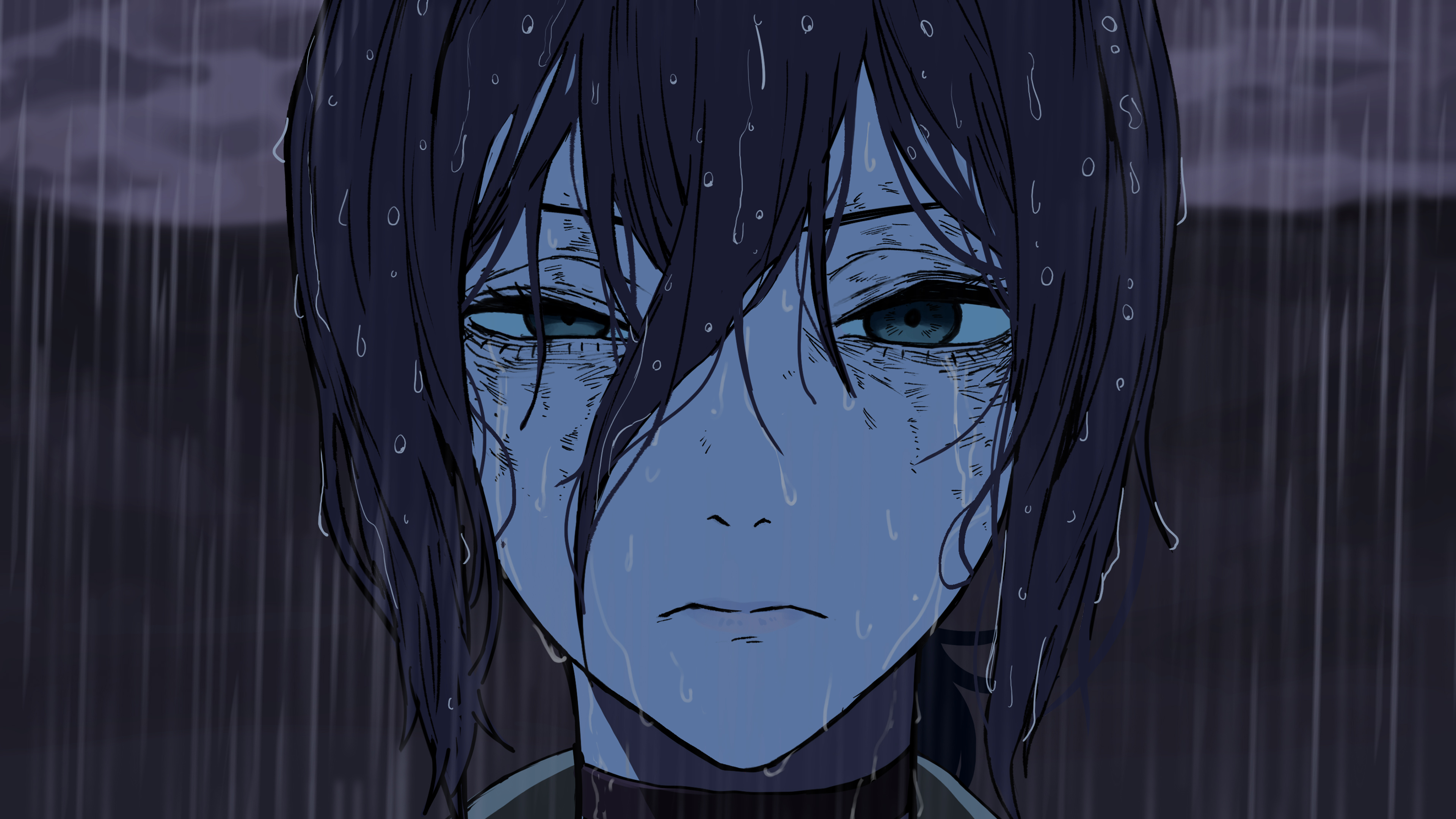 A personal rant on the isolation of academic pursuit and the price of ambition. An honest reflection of a big dream: perjuangan S2 di UNIPD, kesepian di tengah prestasi, dan realita ‘berproses’ sendirian di usia 20an.
 source: